


GriGris
Despite a paralyzed leg, Grigris, 25 year old, dreams of being a dancer. A challenge. But his dreams are dashed when his stepfather falls critically ill. To save him, Grigris resolves to work for petrol traffickers.

Holy Cow
Totone’s carefree teenage life of drinking and dancing takes a turn when he must provide for his 7-year-old sister. Seeking income, he channels his energy into producing an award-winning comté cheese to claim a competition prize.

Souleymane`s Story
A Paris food delivery cyclist and asylum seeker named Souleymane has two days to prepare his story for a make-or-break interview to secure legal residency.

Dahomey
The journey of 26 plundered royal treasures from the Kingdom of Dahomey exhibited in Paris, now being returned to Benin. Diop artistically voices a new generation’s demands.
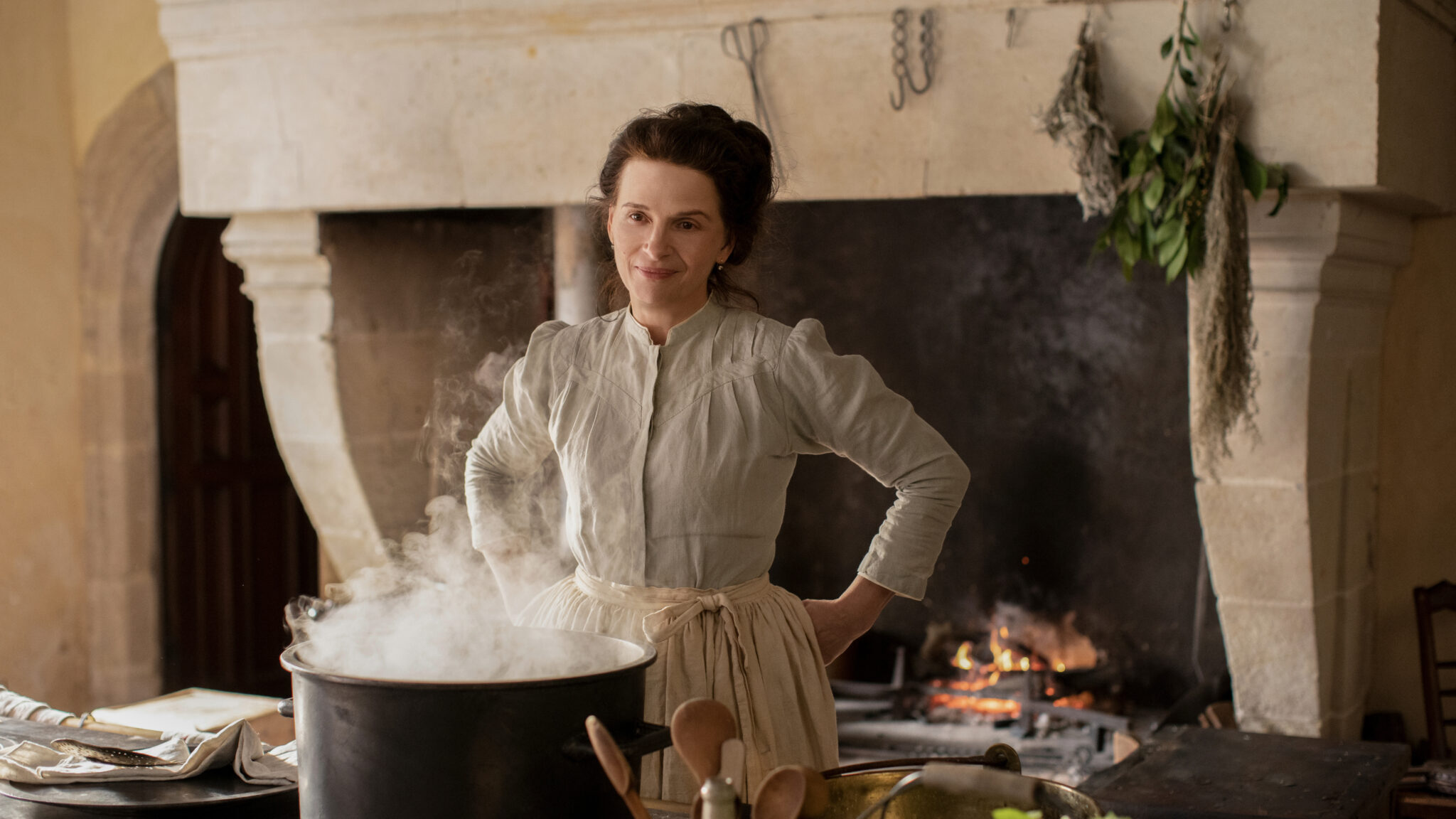
The Taste of Things
The story of Eugenie, an esteemed cook, and Dodin – the fine gourmet chef she has been working for over the last 20 years.
Ouvertures
Reflecting on the legacy of Haitian revolutionary Toussaint L’Ouverture, follows a collective’s process of translating Édouard Glissant’s play Monsieur Toussaint from French to Creole.

Saint Omer
Follows Rama, a novelist who attends the trial of Laurence Coly at the Saint-Omer Criminal Court to use her story to write a modern-day adaptation of the ancient myth of Medea, but things don’t go as expected.
Touki Bouki
Mory, a cowherd, and Anta, a university student, try to make money in order to go to Paris and leave their boring past behind.
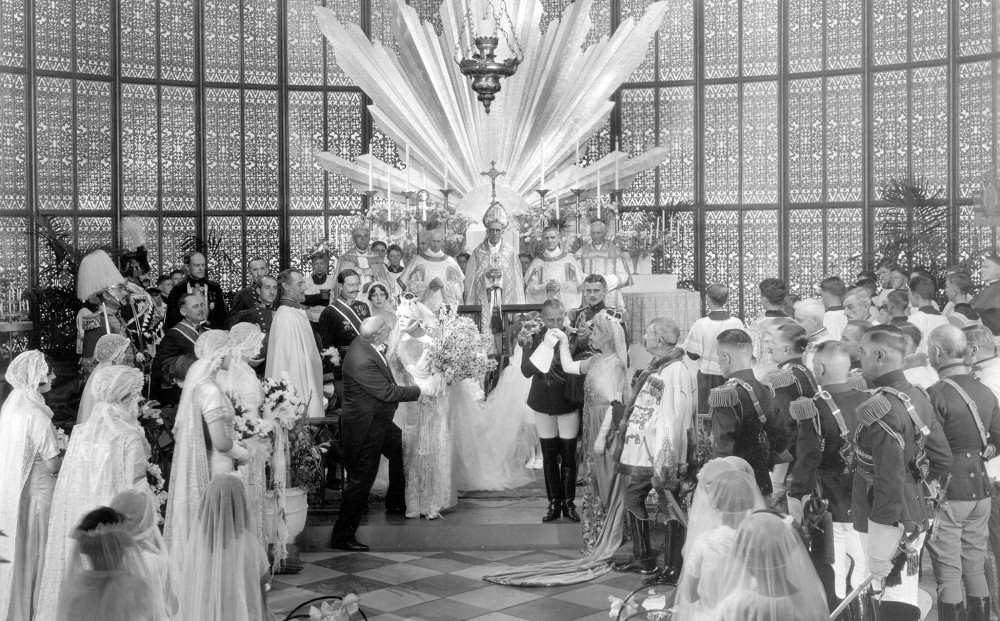
THE WEDDING MARCH
A young impoverished aristocrat falls in love with an inn-keepers daughter, but has to marry money. Recreating the opulent splendor of Vienna, prior to the Great War, the film is a brilliant critique of the sharp contrasts between the decaying aristocracy and the struggling lower classes.

Colette et Justin
French-Congolese documentary filmmaker Alain Kassanda set about to uncover a tumultuous time in his native Congo’s history by filming his grandparents as they look back on their lives under Belgian rule, rebellion, and the unavoidable complications of freedom.

BLACK GIRL
Ousmane Sembène transforms a deceptively simple plot—a young Senegalese woman moves to France to work for a wealthy white couple and finds that life in their small apartment becomes a figurative and literal prison—into a layered critique on the lingering colonialist mindset of a supposedly postcolonial world.

April in Paris French and Francophone Film Festival – A TALE OF LOVE AND DESIRE
First, we’d like to say “merci mille fois” to Professor Emeritus Sonia Lee. The Founding Director of April in Paris, her strong support for African francophone film inspires us to expand our definition of French cinema. Tunisian writer/director Leyla Bouzid’s film explores the contrasting experiences of two Arab students at the Sorbonne. Farah (Zbeida Belhajamor) is a free-spirited Tunisian, determined to take every bit of pleasure from her Parisian adventure before returning home. However Ahmed (Sami Outabali), born in France of Algerian background, finds it equally hard to deny his desire for Farah than to ignore his family’s strict version of Islam. “It’s an edifying and introspective film about embracing our most carnal impulses without shame.” – Lovia Gyarkye, Hollywood Reporter. Stay for a discussion after the film led by Karen Humphreys, Language and Culture Studies, Trinity College.

April in Paris French and Francophone Film Festival – AND THE BIRDS RAINED DOWN
Celebrate April in Paris and join our final night reception at 7 pm, followed by the 8 pm screening of a brilliant and haunting Canadian film shot in Quebec’s awe-inspiring Montmorency Forest. Based on the novel by Jocelyne Saucier, it opens in the aftermath of a destructive wildfire, which sent three elderly men off the grid as near-hermits. But change is inevitable, as Ted (one of the three) dies, and the private life of the survivors is transformed by the arrival of two women. The first (played by acclaimed actor Andrée Lachapelle in her final role) is a fugitive who has spent her life confined in a psychiatric hospital. The other is a young photographer looking for Ted’s hidden paintings of the wildfire. But the recluses’ deep connection with nature isn’t threatened by death, love, or aging, but by the ongoing human damage to the Earth. “Without politics or judgment, the film asks us to cherish life in all its simple pleasures and wonders.” – Pat Mullen, Toronto International Film Festival review.

April in Paris French and Francophone Film Festival – FRANCE
Hartford premiere of a delightfully provocative satire. Writer/director Bruno Dumont’s new film finds both comedy and drama in the tension between our private and public lives. France stars Léa Seydoux, whose films include No Time to Die, The Grand Budapest Hotel and Blue is the Warmest Color, which won her the Best Actress Palme d’Or at Cannes. She perfectly inhabits her role as a celebrity tv journalist, who “lives for her fans.” But after causing an accident she goes silent, trying to find the suppressed reality of her true self. “Amid the film’s riotous satire…Dumont plants a melancholy identity crisis: the television star and the nation are equally isolated in the distorting mirrors of their own fabricated images.” – Richard Brody, the New Yorker. Discussion following the film with Sara Kippur, Language and Culture Studies, Trinity College

April in Paris French and Francophone Film Festival -JOSEP
The highly anticipated debut film of Aurélien Froment, best known as Le Monde cartoonist Aurel, is an animated tribute to the legendary cartoonist Josep Bartoli. Fleeing Spain during the fight against Franco and fascism, Bartoli is placed in a French internment camp, where he expresses his private memories of the past not through speaking, but through his powerful drawings. His larger-than-life adventures see Bartoli escaping to Mexico, where he becomes the confidant and lover of painter Frieda Kahlo. Although meeting with painters including Jackson Pollack and Theodore Rothko, Bartoli (and the film) never forgets the pain of war, and the struggle for freedom. “Josep’s animation is not born from movement but from its mystery.” – José Amador Pérez Andújarˆ, El Antepenúltimo Mohican, Spain. Discussion leader, Karen Humphreys, Language and Culture Studies, Trinity College

April in Paris French and Francophone Film Festival – LE CERCLE ROUGE
This influential New Wave gangster classic is a cool-headed tribute to American film noir. When Casey (Delon) escapes from prison in Marseille, he learns how to pull off a high-stakes jewelry theft in Paris. At first alone in his quest, Fate brings together two other partners: Volonte as a fellow prisoner, and Montand as a nightclub owner. While the diamonds may be within reach, they must still battle the police and the vengeance of the mob. Though their conversations are few and options limited, the three friends find satisfaction in following their code of honor to the end. “I will never forget the emotional depths of Alain [Delon]’s blue eyes. One could see not only his exterior but his interior, his emotions and his past . . .” director John Woo.

April in Paris French and Francophone Film Festival – HAPPENING
“It suits them to think I’m a slut,” says gifted literature student Anne (Anamaria Vartolomei, in a star-making performance) of the puritanical bourgeoise girls in her Angoulême college dorm. In 1963, Anne finds little help from other students or doctors on helping her end a pregnancy that would crush her dream of surpassing her working class background. Disturbing, (mostly) beautiful to look at, and above all real, this film is based on the memoir of Annie Ernaud a Nobel Prize winner in Literature. “Diwan shows you a woman who, in choosing to live her life, risks becoming a criminal and dares to be free.” – Manohla Dargis, New York Times. Discussion following the film with Blase Provitola, Program in Women, Gender, and Sexuality and Language and Culture Studies, Trinity College.

April in Paris French and Francophone Film Festival – CASANOVA
Fans of the masterful accompaniment of pianist Patrick Miller of the Hartt School – mark your calendars! Miller’s music is an essential part of experiencing this classic silent film, based on the historical figure of Casanova. Created largely by Russians emigrees, it is not only the story of a man obsessed by his sexual conquests, but a study of what makes someone into a prisoner of their own desires. Please join us for the Festival’s Opening Reception following the film, sponsored by the Alliance Française of Hartford. There will be one 15 minute intermission.
April in Paris French and Francophone Film Festival – LINGUI
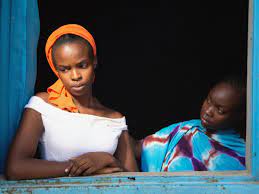
When a 15-year-old girl is pregnant but is not ready to become a mother, is it a matter for herself, her mother, her religion or the state to decide when and if she can terminate her pregnancy? This not-unfamiliar question plays out in outskirts of N’Djamena in Chad, with Maria and her compassionate mother Amina believing it should be a private matter. Although Amina has been shunned for her own earlier transgressions, she looks to the women in her village to find support. “Shines a light on Chad’s strict patriarchal laws, but also the powerful connections women form to help each other survive” – Marya E. Gates, RogerEbert.com. Join us for a discussion after the film with Doyle Calhoun, Language and Culture Studies, Trinity College.

DIABOLIQUE (Les diaboliques) 35mm
Now recognized as one of the greatest directors of the 1950s, Henri-Georges Clouzot (Quai des orfèvres, The Wages of Fear) was originally vilified for telling stories about an unpredictable world where anyone can commit murder under the right circumstances. Inspired by master of suspense Alfred Hitchcock, the film looks at the murky loyalties at a decrepit boarding school, owned by a frail Venezuelan woman named Christina (Vera Clouzot). Her husband is the Headmaster, who not only bullies Christina and the students, but is having an affair with a teacher (played by the legendary Simone Signoret.) The two women come together to plan his murder, but even the best of plans have a way of going very wrong…

LITTLE GIRL (Petite fille)
Stories of hatred and discrimination for children who feel they were born the wrong gender are starting to be replaced with new narratives in film of acceptance and understanding. Petite fille is the moving real-life story about Sasha, a delightful 7-year-old, born a biological boy, who has always known she is a girl. Sasha’s parents have come to embrace their daughter’s reality, moving to a traditional rural community in northeastern France, where they hope to find tolerance, if not acceptance. Realized with rare delicacy and intimacy, veteran documentarian Sébastien Lifshitz’s movie explores the emotional challenges, unexpected triumphs, and small moments in Sasha’s unfolding life

NIGHT OF THE KINGS (La nuit des rois)
A young gang member is sentenced to spend time in MACA, an isolated prison in the Ivorian forest that is ruled by its inmates. Renamed Roman, he arrives with the rising of the red moon, just as inmates are calling for the traditional suicide of an ailing King, to be replaced by a new leader. Stalling for time, King Blackbeard picks the bewildered Roman as his new griot (storyteller). Learning that he will be killed if his story doesn’t go on until dawn, Roman retells the life of legendary outlaw “Zama King,” spinning out ever more fantastical, surreal details in hopes of survival.

THE MYSTERY OF THE EIFFEL TOWER (Le mystère de la tour Eiffel)
Getting the chance to see a silent French film in a cinema is as a rare as rainbow in snow. Especially when it is accompanied by the transporting music of pianist Patrick Miller of Hartt School. Director Julien Duvivier (Pépé le Moko, Un Carnet de Bal) was strongly influenced by German surrealistic horror movies, which is seen in his story of a circus worker (Tramel) who is cheated out of his inheritance by his doppelganger. But the swindler is pursued by an ominous black hooded sect, culminating in a nail-biting chase on the Eiffel Tower – at the time, a mere 40 years old. Join us for an opening reception following the screening.

THE SOCIETY OF THE SPECTACLE (La société du spectacle)
It’s no surprise that after the voices for change in the 1960s that French films would find new techniques to tell us new stories. Writer and filmmaker Guy Dubord released this invigoratingly experimental movie six years after the publication of his book, The Society of the Spectacle. Dubord used the technique of ‘détournement’ hijacking images of the capitalist system to use against itself. The recently restored 2K DCP is a dizzying array of images of Hollywood movies, advertising, war, and protests crushed by the police. The result is an organized chaos that provides a devastating look at a world that remains dominated by image and power.

A DRAMATIC FILM (Un Film Dramatique)
Un film dramatique is a lively documentary that reveals the stories of the first class to attend the newly constructed Dora Maar middle school in a notorious banlieue outside Paris. Filmed over four years, 21 diverse middle schoolers are given cameras to record their daily lives at school and home. With a refreshingly uninhibited approach, Éric Baudelaire offers a new perspective on Islamophobia, assimilation and economic inequality that manages to be insightful and playful. As the students debate elections and the immigration crisis, they also seek to find an answer to the central questions: who are we, and how do we come together to create the future?

A SUMMER’S TALE (Conte d’été)
For the celebrated New Wave auteur Eric Rohmer, the third film of his Tales of the Four Seasons stands out as his “most personal.” Based on events from Rohmer’s youth, A Tale of Summer follows amateur musician Gaspard (Melvil Poupaud) to a seaside resort on the coast of Brittany. There, three women (Amanda Langlet, Gwenaëlle Simon, and Aurelia Nolin) each offer the possibility of romance, but Gaspard’s inability to commit to just one puts his chances at love in jeopardy. Rohmer’s tender and amusing look back at his youth illuminates the fleeting nature of desire and the random nature of our choices, lit up by the languid waves and sun-saturated beaches of summer.

ANTIGONE
Set in an immigrant community in Québec, Antigone updates the timeless play by Sophocles to a story that is all too relevant: the shooting of an immigrant teenager by the police. Ricci stars as the boy’s fiercely loyal sister, who challenges every authority she encounters, willing to sacrifice everything for justice and love. Following the film lead actor Nahéma Ricci will be in attendance to lead a Q. & A.

SLALOM
This riveting Cannes-selected drama explores the ethics of a relationship between a teenage ski prodigy and her predatory instructor, played by Jérémie Renier (L’Enfant). Noée Abita plays 15-year-old Lyz, who’s been accepted to an elite ski club in the French Alps, known for producing some of the country’s top athletes. Seeing something in his new recruit, ex-champion turned coach Fred decides to mold Lyz into his shining star. But under his influence, she must endure more than the physical pressure of the training. Controversial in France until recently, Slalom asks if Lyz – and other young athletes – have the strength to escape their mentor’s exploitation?